
Every property owner eventually faces the same nagging question: is this worth fixing, or is it time to start over? A failing furnace, a cracked sewer line, or a roof nearing the end of its life can each cost thousands of dollars, and guessing wrong can mean wasted money or a bigger headache down the road. Making the right call requires understanding the age of your systems, the true cost of delay, and how repair costs stack up against replacement over time. This guide breaks down the most common repair-or-replace decisions property owners face, so you can budget with confidence instead of panic.
Evaluating Your Home Heating System Before Winter Hits
A heating system that struggles to keep up with cold weather is one of the most urgent repair-or-replace decisions homeowners face, since a total breakdown in freezing temperatures can create real safety risks. In many cases, furnace repair is the smarter short-term move if the unit is less than ten years old and the problem is isolated to a single part, like an igniter or blower motor. Once a system passes the fifteen-year mark, though, repeated repairs often signal that the whole unit is wearing out at once, and a replacement will save money over the next few winters.

Cost is not the only factor worth weighing here. Older furnaces are also far less efficient, meaning a repair might solve the immediate problem while leaving you with higher energy bills for years to come.
- Get a written estimate before agreeing to any major furnace repair so you can compare it against replacement pricing
- Ask how many years the repaired part is expected to last before failing again
- Check your energy bills for the past two winters to see if efficiency has been dropping
- Consider a maintenance plan to catch small issues before they become expensive emergencies
Deciding Between Sewer Line Repair and Full Replacement
Underground plumbing problems are notoriously easy to ignore until they become disasters, but a slow drain or recurring backup is often the first sign of a larger issue below your yard. Left unchecked, a small crack can widen over months, letting soil and roots infiltrate the pipe until a full blockage or collapse forces an emergency call. Catching the warning signs early, gurgling toilets, soggy patches in the lawn, or a sewage smell near a cleanout, can mean the difference between a targeted repair and a full-scale dig. Modern sewer lining technology has made it possible to repair damaged pipes without digging up an entire yard, which can cut both cost and disruption significantly compared to traditional excavation.
A typical lining job costs somewhere between $80 and $250 per foot depending on pipe diameter and access, while full replacement with excavation can run two to three times higher once landscaping, driveway, or concrete repair is factored in. The approach relies on materials and curing techniques that were not widely available even a decade ago, using resin-saturated liners that are inserted through existing access points and cured in place to form a new pipe within the old one. This trenchless method works especially well for cracks, minor root intrusion, or small offset joints rather than a pipe that has completely collapsed.
A camera inspection is usually the deciding factor, since it shows whether the pipe’s structural integrity is intact enough to support a liner. If the line has sagged, crushed, or shifted significantly out of alignment, replacement becomes the safer long-term choice even though it costs more upfront. Property owners should also weigh the age and material of the existing pipe, since older clay or Orangeburg lines tend to have more widespread deterioration that a single lining repair won’t fully address.
That said, not every situation is a good candidate for trenchless repair. A severely collapsed line, major grade problems, or pipe made from outdated materials may need full replacement regardless of the cost savings a lining repair might otherwise offer. Collapsed sections are the clearest disqualifier. Lining technology works by inserting a resin-coated tube into the existing pipe and inflating it to form a new inner wall, but there has to be a structurally intact host pipe for that liner to adhere to.
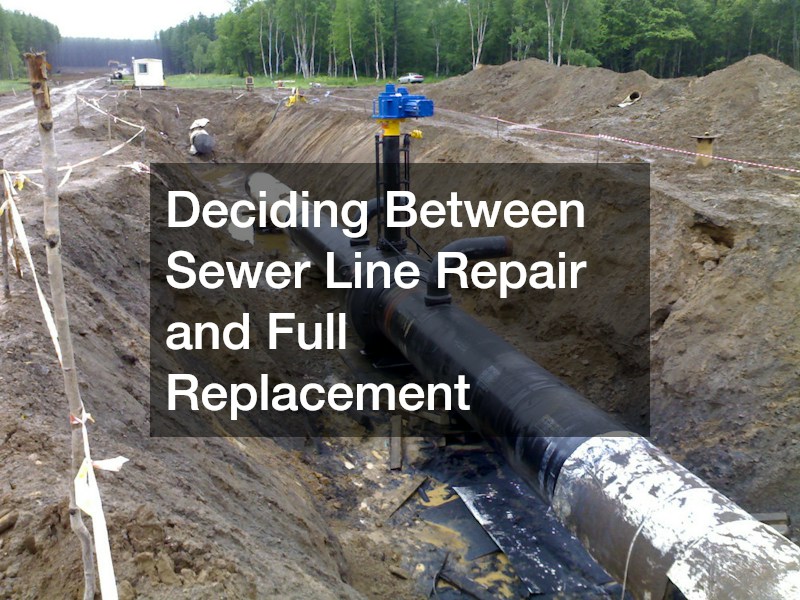
If the line has fully collapsed or crushed shut, there’s nothing to line, and excavation becomes the only option. Grade and alignment issues present a similar problem. Sewer lines rely on consistent downward slope to move waste by gravity, and if a section has sagged, shifted, or developed a “belly” from soil settlement, relining won’t correct the underlying pitch. In these cases, the pipe often needs to be dug up and reset at the proper angle.
Pipe material matters too. Older homes with clay, Orangeburg, or cast iron piping are prone to root intrusion, corrosion, and joint separation that go beyond what a liner can reliably reinforce. A camera inspection can help determine whether the existing pipe still has enough structural integrity to support a lining repair, or whether the age and condition of the material point toward replacement as the more durable long-term investment.
- Request a camera inspection before agreeing to any sewer work — expect to pay $100-$400, but it reveals cracks, bellies, or root intrusion so you’re not guessing at the problem
- Ask whether your soil type or tree roots make future problems more likely, since clay soil shifts more and roots near older clay or cast-iron pipes often mean repeat repairs
- Compare quotes for trenchless repair against traditional dig-and-replace methods, factoring in that trenchless costs more per job but avoids tearing up landscaping, driveways, or foundations
- Get at least two to three quotes and ask each contractor to specify pipe material and expected lifespan, since PVC can outlast older materials by decades
- Check whether your homeowner’s insurance covers any portion of sewer line failures, and consider a separate service line endorsement if your policy excludes it
- Factor in the age of your home’s plumbing system overall — if pipes are original and over 40-50 years old, a full replacement may prevent recurring repair costs
Weighing Roof Repairs Against a Full Roof Replacement
Roofing decisions tend to hinge on both age and material, and property owners are increasingly asking about upgrading to roof metal decking when the time comes for a larger project. Metal decking offers better durability against wind and fire compared to older plywood substrates, which can be a meaningful selling point if you plan to stay in the property long term. A few missing shingles or a small leak, however, rarely justifies tearing off the whole roof, and a targeted repair is usually the more sensible first step.
The real warning signs to watch for are widespread granule loss, sagging areas, or leaks that keep reappearing in different spots after repairs. When those issues show up together, they usually mean the underlying structure is failing, not just the surface layer.
- Get on a ladder or hire an inspector to check for soft spots and sagging
- Ask your contractor how many more years a repair is likely to buy you
- Find out whether your current decking material is rated for your climate
- Review your roof’s warranty terms before paying for extensive repairs
Renovation Projects That Call for Heavy Machinery
Some repair-versus-replace decisions are less about a single broken system and more about a full-scale renovation, and those larger jobs often require equipment far beyond what a typical homeowner owns. Rather than purchasing expensive machinery outright, many property owners turn to heavy equipment rental to handle excavation, grading, or demolition work for a fraction of the cost of buying. This approach makes sense whether you are regrading a yard after a drainage failure or clearing space for a home addition.
Owned machinery brings its own version of the repair-or-replace question, and it usually starts at the ground-engaging parts. Grader blades and bucket edges wear down quickly in rocky or compacted soil, and custom cutting edge fabrication is typically far cheaper than replacing an entire attachment, especially when the base equipment is still in good working condition.
Renting also gives you flexibility to match the machine to the job, rather than being stuck with a single piece of equipment that may be overkill or underpowered for future projects. It is worth discussing your project timeline with the rental company, since multi-week rentals often come with better daily rates than short-term bookings.
- Confirm whether delivery and pickup are included in the rental price
- Ask about operator training requirements if you have not used the equipment before
- Check insurance coverage in case of damage during the rental period
- Compare rental costs against the price of hiring a contractor who already owns the equipment

Managing Job Sites During Extended Repair Projects
Any renovation or repair project that stretches beyond a few days brings practical logistics questions that are easy to overlook during initial budgeting. If your project involves a crew working on-site for an extended period, arranging a construction porta potty rental is a simple way to keep the job running smoothly without workers needing to leave the site repeatedly. This is especially relevant for larger repair jobs like roof replacements, foundation work, or additions where plumbing may be temporarily disconnected.
Overlooking these details can slow down a project more than people expect, since crews without proper facilities on-site often lose valuable working hours. Building this small cost into your overall budget from the start prevents surprises once the project is already underway.
- Ask contractors whether site facilities are included in their bid or billed separately
- Confirm the rental company’s servicing schedule for multi-week projects
- Factor facility rental into your total project budget, not just materials and labor
- Check local permitting rules if the unit will sit on a public right-of-way
Clearing Debris During Major Demolition or Cleanup Work
Whether you are replacing a roof, gutting a kitchen, or clearing storm damage, debris removal is one of the most underestimated costs in any repair-or-replace decision. A dumpster rental is often the most economical way to handle large volumes of waste, particularly for projects that generate mixed materials like drywall, shingles, and old lumber. Sizing the container correctly matters, since an undersized dumpster means paying for a second haul, while an oversized one wastes money on unused capacity.
Local regulations can also affect this part of your project more than people expect. Some municipalities require permits for dumpsters placed on the street, and certain materials, like roofing tar or old insulation, may need special disposal handling.
- Ask your hauler about weight limits before loading heavy materials like shingles or concrete
- Request the dumpster size based on square footage of the project, not just guesswork
- Confirm what materials are prohibited, such as paint, batteries, or chemicals
- Check whether rental pricing includes drop-off, pickup, and a set number of rental days
Structural Projects That Require Specialized Lifting Support
Some repair-or-replace decisions escalate quickly once a structural element is involved, particularly when heavy materials need to be moved to elevated or hard-to-reach areas of a property. For jobs like installing rooftop HVAC units, placing steel beams, or removing a damaged chimney, crane services provide the lifting capacity and precision that ground-level equipment simply cannot match. Bringing in a crane for even a single day can be far safer and more cost-effective than attempting a workaround with smaller machinery.
Scheduling matters quite a bit here, since crane operators typically need advance notice to coordinate street closures, permits, or utility clearance. Getting a clear quote upfront, including setup and travel time, helps prevent this part of the project from becoming a budget surprise.
- Confirm whether your project needs a mobile crane or a larger tower crane
- Ask about permit requirements if the crane will block a street or sidewalk
- Get quotes based on total job time, not just the hours the crane is actively lifting
- Check whether the operator’s fee includes rigging and safety personnel

When Building New Makes More Financial Sense Than Repairing
At some point, every property owner has to ask whether pouring more money into repairs is actually the right long-term move. If a home has multiple failing systems at once, foundation issues, and outdated infrastructure throughout, working with a custom home builder to start fresh can sometimes cost less over a decade than a string of endless repairs. This is especially true for older properties where bringing everything up to current code would require gutting the structure anyway.
Building new also gives owners more control over layout, materials, and energy efficiency than trying to retrofit an aging structure. It is a bigger upfront investment, but for some properties, it eliminates years of unpredictable repair costs.
- Get a full inspection to identify how many major systems are near failure
- Compare long-term repair estimates against the cost of new construction
- Ask about energy efficiency standards a new build would meet compared to your current home
- Consider resale value differences between a renovated older home and new construction
Considering Investment Property Repairs Versus New Opportunities
Property owners managing rental or investment properties face a slightly different version of this decision, since the math has to account for tenant impact and rental income, not just personal comfort. Sometimes the smarter financial move is not repairing an aging building at all, but instead exploring a commercial property for lease in a better location or condition, especially if repair costs are eating into profit margins. This is particularly relevant for older commercial buildings where mechanical systems, roofing, or plumbing all need attention around the same time.
Running the numbers on both paths, continued repair versus relocating, gives a clearer picture than gut instinct alone. A property that seems like a bargain on paper can quickly become a liability if its infrastructure requires constant reinvestment.
- Calculate the cost of repairs as a percentage of annual rental income
- Compare vacancy costs of relocating against the ongoing cost of repairs
- Ask a commercial real estate agent about current lease rates in your area
- Factor in tenant disruption and potential lease penalties during major repair work
Repair-or-replace decisions rarely have a one-size-fits-all answer, but breaking each system down by age, cost, and long-term impact makes the choice far less overwhelming. Start by getting written estimates for both options whenever possible, and weigh them against how many years you plan to stay in the property. Whether you are dealing with a single failing appliance or considering a full rebuild, a clear budget and a little research will save you money and stress in the long run.