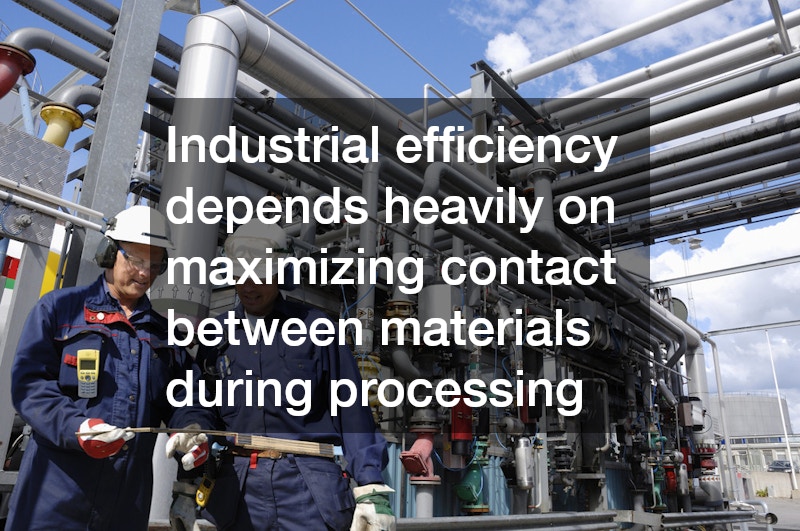

Industrial processing systems depend heavily on efficient contact between gases and liquids to complete separation, purification, and chemical reactions. In industries such as petrochemicals, water treatment, and environmental engineering, packed columns play a key role in making these processes work effectively. These systems are designed to maximize surface area while minimizing resistance to flow so that materials can interact more efficiently.
One of the most widely used components in these systems is a structured or loose-fill medium that improves mass transfer performance inside towers and columns. Plastic-based options have become especially popular due to their durability, corrosion resistance, and cost efficiency.
Understanding how these materials function helps explain why they are so important in modern industrial operations.
Understanding the Role of Packing in Industrial Systems
Packed columns are used to promote contact between two phases, typically a liquid and a gas. This contact is essential in processes such as absorption, stripping, and distillation. Inside these columns, packing material increases the surface area available for interaction, which improves transfer efficiency.
Without internal packing, fluids would pass through the column with limited interaction, resulting in lower efficiency and reduced output quality. By adding structured or random elements, flow paths become more complex, increasing turbulence and improving phase contact. This leads to better separation and higher overall process efficiency.
Different types of packing materials are used depending on the application, including ceramic, metal, and plastic variants. Each material offers unique benefits, but plastic options are often preferred in corrosive environments due to their resistance to chemical degradation and lower weight.
How Random Packing Enhances Mass Transfer Efficiency
Random packing is designed to be loosely arranged inside a column rather than placed in a fixed structure. This irregular arrangement creates a large surface area and promotes turbulent flow, which improves contact between gas and liquid phases. The increased interaction enhances mass transfer rates, making industrial processes more efficient.
One major advantage of this approach is flexibility. Because the packing is not fixed in place, it can be installed, replaced, or adjusted with relative ease depending on operational needs. This makes maintenance simpler and reduces downtime in industrial facilities.
In addition, random packing materials are engineered to maintain consistent performance even under varying flow conditions. This stability is important in large-scale systems where process demands may fluctuate over time.
Material Advantages in Modern Industrial Applications
Plastic-based packing materials are widely used due to their lightweight structure and strong chemical resistance. They are especially useful in environments where metal or ceramic materials may corrode or degrade over time.
Another advantage is cost efficiency. Plastic materials are generally less expensive to manufacture and install, making them a practical choice for large-scale operations. Their lower weight also reduces structural load on industrial towers, which can lead to additional savings in construction and maintenance.
In many applications, a plastic random packing solution is selected because it provides a balance of performance and durability. It is especially effective in water treatment systems, gas scrubbers, and chemical processing units where consistent mass transfer is required over long operational periods.
Applications in Real-World Industrial Systems
In water treatment facilities, packing materials are used to improve aeration and remove contaminants from wastewater. The increased surface area allows for more efficient oxygen transfer, which supports biological treatment processes.
In chemical processing plants, packed columns are used for separating compounds based on volatility or solubility. The efficiency of these systems depends heavily on the internal structure of the packing material, which determines how effectively substances interact.
A plastic random packing system is also commonly used in air pollution control systems, where it helps remove harmful gases from industrial emissions. By increasing contact between air streams and treatment liquids, these systems reduce environmental impact and help meet regulatory standards.
Operational Benefits for Industry Efficiency
One of the biggest benefits of using advanced packing materials is improved operational efficiency. By enhancing mass transfer, industrial systems can achieve higher output while using less energy. This leads to reduced operating costs and improved sustainability.
Maintenance efficiency is another important factor. Because plastic materials are resistant to corrosion and scaling, they require less frequent replacement compared to traditional materials. This reduces downtime and helps maintain consistent production schedules.
In large-scale facilities, even small improvements in efficiency can result in significant long-term cost savings. As a result, selecting the right packing material is a critical decision in system design and optimization.
Design Considerations and Performance Factors
When selecting packing materials, engineers consider several factors including surface area, void space, pressure drop, and chemical compatibility. The goal is to maximize efficiency while minimizing resistance to flow.
The geometry of the packing material plays a major role in performance. Irregular shapes increase turbulence, while uniform distribution helps maintain consistent flow paths throughout the column. Balancing these factors is essential for achieving optimal results.
In many cases, a plastic random packing configuration is chosen specifically for its ability to maintain performance under a wide range of operating conditions. This versatility makes it suitable for both new installations and system upgrades.
Industrial efficiency depends heavily on maximizing contact between materials during processing. Packed columns provide a practical solution by increasing surface area and improving mass transfer performance across a wide range of applications.
Through the use of durable and flexible materials, modern systems can achieve higher efficiency, lower maintenance requirements, and improved operational stability. In many industrial environments, plastic random packing plays a key role in supporting these outcomes by offering a reliable and cost-effective solution for enhancing process performance.
As industries continue to focus on efficiency and sustainability, the importance of optimized column design will only continue to grow. Selecting the right packing material remains a fundamental part of achieving long-term operational success.