

Here’s why your business should consider this option.
1. Cost Efficiency
One of the most compelling reasons to opt for crane rentals is cost efficiency. Investing in a new crane can be prohibitively expensive, especially for small to medium-sized businesses. Beyond the initial purchase price, maintaining and insuring such machinery over time can further increase costs. Conversely, renting a crane allows businesses to pay only for the duration of its use, avoiding significant capital expenditure. This can free up funds to be allocated to other crucial areas such as staffing or research and development.
Cranes also come in various types and sizes, catering to different project needs. By opting for rentals, businesses have the flexibility to choose a crane perfectly suited for each unique task. This adaptability ensures that companies aren’t stuck with equipment that may be obsolete or unsuitable for future projects. Additionally, with crane rentals, companies can regularly access the latest models and technology without sinking resources into ownership. This ensures operational efficiency and can lead to improved project outcomes.
Furthermore, rental agreements often include the cost of maintenance and repairs, mitigating unexpected expenses. When a crane breaks down or needs servicing, rental companies handle the logistical and financial aspects of getting the machinery back in working order. This eliminates downtime and the associated costs of delays in project timelines. Thus, by choosing to rent, businesses can continue to operate smoothly, keeping cash flow steady and predictable.
2. Enhanced Safety
Safety is paramount in any industry involving heavy machinery, and crane rentals ensure access to top-tier safety standards. Rental companies are tasked with upholding rigorous maintenance routines, ensuring that their equipment is consistently in peak condition. This reduces the likelihood of accidents caused by equipment failure. Consequently, businesses can rely on rented cranes to operate safely and efficiently, providing peace of mind during complex logistical processes.
Another safety advantage of renting a crane is access to expert operators, which is often included in rental agreements. Experienced professionals bring invaluable knowledge and skill, significantly lowering the risk of operational mishaps. Their proficiency ensures that projects are executed smoothly and safely, minimizing the chances of workplace injuries. Trained operators know how to handle varying challenges that a project may present, offering businesses an additional layer of reliability.
Finally, compliance with industry and government safety standards is crucial, and rental companies frequently update their fleets to meet those evolving codes. Using rented cranes can help businesses stay abreast of the latest safety regulations without incurring additional compliance costs. This proactive approach to safety compliance can enhance a company’s reputation, ensuring long-term sustainability and profitability in an increasingly competitive landscape.
3. Operational Flexibility
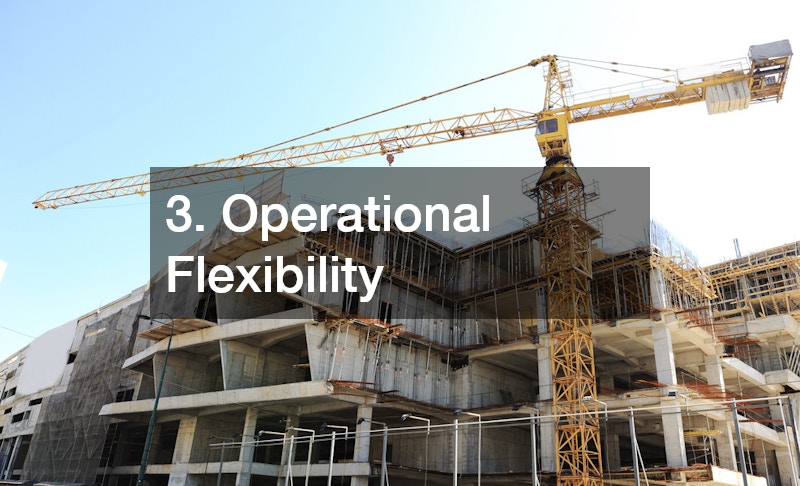
In today’s fast-paced business environment, operational flexibility can provide a significant competitive edge. Crane rentals offer this flexibility by allowing businesses to scale their lifting capabilities up or down according to the needs of specific projects. This adaptability can be particularly advantageous for companies involved in multiple or concurrent projects, requiring different crane capacities and features. By renting, businesses can swiftly respond to varying project demands without logistical and financial strain.
Crane rentals also streamline logistics, as the provider often manages transportation, setup, and disassembly. This convenience frees up internal resources, enabling companies to focus on core competencies rather than logistical challenges. Efficient logistics lead to faster project completion times and reduced operational hiccups. Furthermore, businesses can mitigate the risks associated with equipment downtime or damage, ensuring continuity in their operations.
Moreover, during periods of economic uncertainty, renting cranes enables businesses to avoid long-term financial commitments associated with owning heavy machinery. This flexibility allows firms to maintain a lean operational model, capable of adapting to shifting market conditions. In the end, crane rentals provide a viable solution for maintaining agility, allowing businesses to thrive in dynamic environments.
Crane rentals present a strategic advantage for businesses aiming to enhance efficiency, safety, and flexibility while managing potentially overwhelming costs. By opting for rentals, businesses can allocate resources more effectively, maintain high safety standards, and adapt to changing demands seamlessly. This makes crane rentals a prudent choice for companies looking to optimize their operations and drive growth in competitive industries.